
angio surgery kit
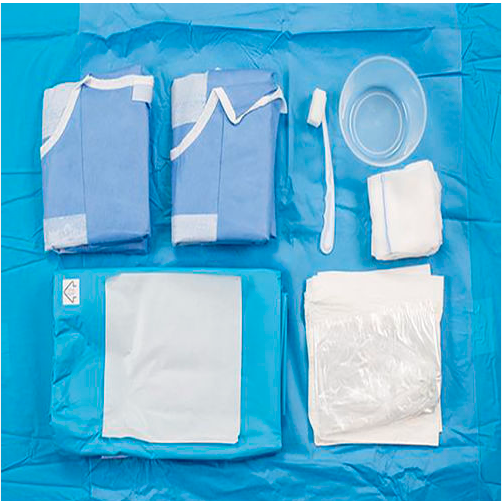
An angio surgery kit (or angiography/vascular access kit) is a sterile, single-use collection of essential medical tools used by doctors in cardiology and radiology to access, visualize (angiography), and treat blood vessels (angioplasty), featuring items like catheters, guidewires, syringes, drapes, and manifolds, all bundled for efficiency in minimally invasive procedures.
What's Inside (Typical Components):
Access Tools: Needles, scalp vein sets for insertion.
Catheters & Wires: Thin tubes (catheters) and guidewires to navigate vessels.
Control & Delivery: Syringes, manifolds (Y-connectors), torque devices to guide catheters and inject contrast.
Sterile Barriers: Drapes, gowns, and covers for the patient and equipment.
Other: Hemostatic devices, pressure monitoring lines, sometimes small balloons or stents.
Purpose:
Diagnosis (Angiography): Visualize blocked or narrowed arteries by injecting contrast dye.
Treatment (Angioplasty/PCI): Open blocked vessels using balloons and place stents to keep them open, restoring blood flow.
How It's Used:
Access: A doctor makes a small puncture (often in the groin or wrist) to enter a blood vessel.
Navigation: Guidewires and catheters are advanced to the target area (e.g., heart).
Intervention: Contrast is injected for imaging, or balloons/stents are deployed for treatment.
Closure: After the procedure, the catheter is removed, and the access site is closed with pressure or a special device.
These kits streamline procedures, reduce setup time, and ensure sterility for these critical heart and vascular interventions.
Angio surgery kits are used in minimally invasive vascular procedures (like angiography, angioplasty) by qualified medical staff, involving sterile preparation, locating the artery, inserting guidewires and catheters under X-ray (fluoroscopy), injecting contrast dye to find blockages, using balloon catheters to widen vessels (sometimes with stents), and finally, closing the puncture with a specialized device like Angio-Seal, following strict sterile techniques and post-procedure care instructions. The exact steps vary by kit and procedure, but the core involves access, visualization, intervention, and closure.
General Steps for Angiography/Angioplasty (Example: Radial Access)
Preparation & Access:
Open sterile kit components in a sterile field (drapes, gowns, syringes, etc.).
Numb the skin (e.g., wrist) and insert a needle into the artery (radial or femoral).
Thread a thin, flexible guidewire through the needle, guided by X-ray.
Catheter Placement & Visualization:
Advance a sheath (small tube) over the wire into the artery.
Guide the main catheter over the wire to the heart/target area.
Inject contrast dye (angiogram) for X-ray visualization to find blockages.
Intervention (If Needed):
Insert a balloon-tipped catheter over the guidewire to the blockage.
Inflate the balloon to push plaque against the artery wall, widening the vessel (angioplasty).
If a stent is used, it's placed over the balloon, expanded, and left behind to keep the artery open after the balloon is removed.
Closure (e.g., Angio-Seal):
Remove catheters and guidewire.
Insert the closure device (like Angio-Seal) into the puncture site.
Deploy the internal anchor, pull back to apply tension, and cut the suture, allowing the body to absorb the collagen plug over weeks/months.
Key Kit Components & Purpose
Drapes & Gowns: Maintain sterility.
Syringes & Needles: For local anesthetic, dye injection, flushing.
Guidewires: Act as tracks for catheters.
Catheters (Guidewire, Balloon, Stent): Deliver tools to the blockage.
Contrast Dye: Makes vessels visible on X-ray.
Vascular Closure Device (VCD): Seals the puncture site.
Important Considerations
User: Only qualified medical professionals.
Sterility: Critical throughout the entire process.
Imaging: Continuous X-ray (fluoroscopy) is essential.
Post-Procedure Care: Specific activity restrictions (no heavy lifting, driving, etc.) are required.
 Send Email
 WhatsApp